Wednesday, January 09, 2008

10 Things I Hate About...NASCAR

1. Jimmy Spencer's temper (video with color commentary)
2. Left turn, left turn, left turn...
3. Caution laps
4. Restrictor plates
5. Dirty racers
6. Robbie Gordon
7. No track within an hour of my house
8. "The Hardee's, Best Buy, Nextel, Sears Chevrolet really performed today..."
9. Brad Daugherty's race commentary
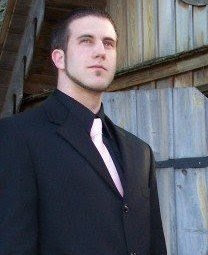
10. Ned Jarrett's glass eye (pictured)

10 Things I Love About...NASCAR

1. 700+ Horsepower
2. 200 MPH
3. 43 cars, 1 track
4. Banked curves
5. Carl Edwards' backflip
6. Burnouts
7. LOUD!!!
8. They got trucks!
9. Wrecks
10. "Gentlemen, start your engines!"

In the Know #6

January 10, 2008


Word of the Day from Dictionary.com:

remonstrate
\rih-MAHN-strayt; REH-mun-strayt\, intransitive verb:

1. To present and urge reasons in opposition to an act, measure, or any course of proceedings -- usually used with 'with'.

transitive verb:
1. To say or plead in protest, opposition, or reproof.


Today in history, according to Wikipedia:

1776 - Thomas Paine publishes Common Sense.

1920 - The League of Nations holds its first meeting and ratifies the Treaty of Versailles ending World War I.

1929 - Tintin (pictured, with Snowy), a comic book character created by a Belgian artist under the pen name of Herge, makes his debut. Tintin would go on to be published in over 200 million comic books in over 40 languages.

1946 - The first General Assembly of the United Nations opens in London. 51 nations are represented.

1990 - Time Warner is former with the merger of Time Inc. and Warner Communications Inc.


Today's Famous Births:

1738 - Ethan Allen, American Revolution military leader

1883 - Aleksei Nikolaevich Tolstoi (pictured), Russian writer, War and Peace and Anna Karenina

1938 - Willie McCovey, American baseball player, 6-time All Star

1939 - Sal Mineo, American actor

1945 - Rod Stewart, Scottish singer, "Have I Told You Lately?"

1949 - George Foreman, American boxer

1953 - Pat Benatar, American singer, "Hit Me With Your Best Shot"

1953 - Bobby Rahal, American race car driver and team owner


Trivia:
Today's category - The Hershey Company


~ Milton S. Hershey's first candy shop, located in Philadelphia, failed.

~ After a second failure in New York, he returned to Pennsylvania and founded Lancaster Caramel Company, which he sold for $1,000,000 in 1900.

~ In 1903, Hershey began construction of a chocolate plant in Derry Church, Pennsylvania.

~ The Hershey Kiss (pictured) was introduced in 1907.

~ Hershey manufactures non-chocolate candies such as Bubble Yum, Jolly Rancher, Good & Plenty and Twizzlers.


I always wondered...
...how a DVD works...


A DVD (pictured) is composed of several layers of plastic, creating a thickness of about 1.2 millimeters. Information is encoded in a series of bumps arranged in a single, continuous spiral track of data. The tracks are separated by only 740 nanometers. Each of the bumps is 320 nanometers wide, 400 nanometers long and 120 nanometers high. If the track were stretched out into a straight line, it would extend almost 7.5 miles. This means a double-sided, dual-layer disc's data track would stretch nearly 30 miles. For a dual-layer disc, aluminum is used for the inside layer and a semi-reflective gold is used for the outer layer, which allows the DVD player's laser to read through the first layer.

The wavelength of a DVD laser is 640 nanometers, allowing it to read the bumps on the track. The light from the laser is bounced off the bumps and hits an optical sensor, which interprets the changes in reflection into bits and bytes. The laser moves outward as the DVD plays. The disc spins slower the farther the laser is from the center in order the keep the speed of the track moving past the laser constant.

- MPEG encoding is used on DVD's.
- A single-side single-layer DVD holds 4.38 GB.

["How a DVD works" Reference: Howstuffworks.com; electronics.howstuffworks.com/dvd.htm]

Tuesday, January 08, 2008

In the Know #5

January 9, 2008


Word of the Day from Dictionary.com:

pertinacious \puhr-tin-AY-shuhs\, adjective:
1. Holding or adhering obstinately to any opinion, purpose, or design.
2. Stubbornly or perversely persistent.


Today in history, according to Wikipedia:

1788 - Connecticut becomes the fifth state to join the United States.

1861 - "The Star of the West" incident occurs near Charleston, South Carolina. This is considered by some as the first shots of the American Civil War.

1951 - The United Nations headquarters building is officially opened in New York City.

2002 - The US Department of Justice announces it is going to pursue a criminal investigation of Enron (logo pictured).

2006 - The Phantom of the Opera surpasses Cats as the longest running show on Broadway.


Today's Famous Births:

1913 - Richard Nixon, 37th President of the United States.

1934 - Bart Starr (pictured), American football player with the Green Bay Packers, winner and MVP of Super Bowl I and II.

1935 - Bob Denver, American actor, "Gilligan's Island"

1959 - Mark Martin, NASCAR driver

1965 - Muggsy Bogues, American basketball player, the shortest basketball player in NBA history at 5'3".

1967 - Dave Matthews, South African singer and musician, "Ants Marching" and "Crash Into Me".

1978 - Chad Johnson, American football player, 4 Pro Bowls and led NFL in receiving yards in 2006.

1980 - Sergio Garcia, Spanish golfer, 2nd place 1999 PGA championship.


Trivia:
Today's category - The Academy Awards


~ The first Academy Awards ceremony was held on Thursday, May 16, 1929, at the Hollywood Roosevelt Hotel.

~ Bob Hope (pictured) has hosted the Academy Awards more times than anyone else.

~ Three films have won the "Big Five" Academy Awards: It Happened One Night (1934), One Flew Over the Cuckoo's Nest (1975) and Silence of the Lambs (1991).

[The "Big Five" includes Best Picture, Best Director, Best Writing (original work or adapted screenplay), Best Actor and Best Actress]


I always wondered...
...what happened in the 1991 dissolution of the Soviet Union...


The U.S.S.R. - Union of Soviet Socialist Republics - was formed in 1922 when the Bolshevik republics of the Russian SFSR, the Transcaucasian SFSR, the Ukrainian SSR and the Byelorussian SSR approved the Treaty of Creation of the U.S.S.R. and the Declaration of the Creation of the U.S.S.R.

Vladimir Lenin, was leading the Bolshevik party at the institution of the U.S.S.R. After his death, Joseph Stalin came to power and ruled with an iron fist. The post-Stalin Soviet was governed by a collective of Soviet officials. Nikita Khrushchev asserted his power in the background of this joint government. The next major stand-alone leader for the U.S.S.R. was Leonid Brezhnev, who led the country until his death in 1982. A few short years after Brezhnev's death, Mikhail Gorbachev (pictured) ascended to the position of General Secretary of the Communist Party of the Soviet Union.

And so we have a history of the leadership of the U.S.S.R. What is the thread that runs throughout them? A declining economic and social structure. Gorbachev's reforms did not have their intended result and led to an almost complete breakdown of these already strained systems.

February 7, 1990 - the Central Committee of the Communist Party of the Soviet Union agreed to give up its monopoly of power.

March 11, 1990 - Lithuania declared its independence, which resulted in a response to suppress it.

December 1, 1991 - Ukrainian popular referendum, 90% of voters opted for independence.

December 8, 1991 - leaders of Russian, Ukrainian and Belarusian republics signed the Belavezha Accords declaring the Soviet Union dissolved (disputed by the Soviet government).

December 21, 1991 - representatives of Russian states signed the Alma Ata Protocol, which confirmed the dissolution.

December 25, 1991 - Gorbachev resigns as president of the U.S.S.R., yielding power to the president of Russia, Boris Yeltsin.


The 15 former republics of the Soviet Union, which became independent states in 1991:
1 - Armenia
2 - Azerbaijan
3 - Belarus
4 - Estonia
5 - Georgia
6 - Kazakhstan
7 - Kyrgyzstan
8 - Latvia
9 - Lithuania
10 - Moldova
11 - Russia
12 - Tajikistan
13 - Turkmenistan
14 - Ukraine
15 - Uzbekistan

Monday, January 07, 2008

In the Know #4

January 8, 2008


Word of the Day from Dictionary.com:

mimetic \mim-ET-ik\, adjective:
1. Apt to imitate; given to mimicry; imitative.
2. Characterized by mimicry; -- applied to animals and plants; as, "mimetic species; mimetic organisms."


Today in history, according to Wikipedia:

1790 - George Washington delivers the first State of the Union Address in New York City.

1815 - Andrew Jackson leads American forces (pictured) to victory over the British at the Battle of New Orleans, the last major battle of the War of 1812.

1835 - US national debt is 0 for the first and only time.

1918 - President Woodrow Wilson announces his "Fourteen Points" for the aftermath of War World I.

1982 - Break-up of AT&T into 7 Regional Bell Operating Companies.


Today's Famous Births:

1821 - James Longstreet, American Confederate general

1935 - Elvis Presley, American singer and actor, "The King"

1942 - Stephen Hawking (pictured), American theoretical physicist and author, A Brief History of Time

1947 - David Bowie, English musician and actor, "Space Oddity" and Labyrinth

1967 - R Kelly, American singer, "I Believe I Can Fly"

1971 - Jason Giambi, American baseball player


Trivia:
Today's category - Automobiles prior to 1900


~ Claims for the first automobile date back to around 1672 when Ferdinand Verbiest, a Jesuit missionary to China, supposedly built the first steam-powered car.

~ Francois Isaac de Rivaz, a Swiss inventor, designed the internal combustion engine and built an automobile using the engine.

~ Karl Benz (pictured) is credited as being the father of the modern automobile.

~ Gottlieb Daimler and Wilhelm Maybach formed Daimler Motor Company (DMG) in 1890 and sold their first vehicle in 1892.

~ In 1897, Rudolf Diesel built the first engine bearing his name.


I always wondered...
...how high-def works...


High definition video is any video with a resolution greater than standard definition. The most common resolutions available now are 1280x720 (720i or 720p) and 1920x1080 (1080i or 1080p). [Visual graph pictured]


3 measurements included in naming high-def resolutions:
  • Number of lines in vertical display resolution - 480 vertical lines is standard definition (broadcast cable), 720 or 1080 is high definition.
  • Scanning system - interlaced or progressive - Interlaced scanning means that half the field is redrawn for the first refresh and the other half is redrawn in the second refresh Progressive scanning redraws the entire image with each refresh.
  • Number of frames per second or fields per second - This number is often dropped from the name. Technically, the names should read 720p60, 1080i30 or 1080p30; the latter number denoting the frames per second or fields per second. At 50 refreshes per second, interlaced scanning makes still images clearer than progressive scanning, but moving images lose some of their quality, compared to 30 frame progressive.
LCD - Liquid Crystal Display - a liquid-crystal gel is sandwiched between two polarized panels and divided into pixels, each pixel can be controlled by regulating voltage to that pixel (higher voltages equal darker pixels). LCD's cannot reproduce pure black because the pixels are not opaque. Contrast ratios tend to be less in LCD's than in plasma screen TV's.

Plasma - As in LCD's, plasma displays sandwich the gases argon and neon between two plates of glass. The gases are split into cells (pixels) and electrodes run along the front and back of the cells. The electrodes emit electricity which causes the gases to become ionized plasma, which, in turn causes the molecules of gas to rush toward the electrodes. When the ions strike the electrodes...BAM!...photons.

OLED display - Organic Light Emitting Diode display (pictured) - A film of electroluminescent organic compounds (when electricity is applied, light is emitted) are "printed" on a carrier (surprisingly, the medium can be printed with ink-jet printers, modified, of course). Unlike LCD's, OLED's require no backlight, hence light emitting diode. Sony's 11-inch OLED TV is a mere 3 millimeters thick and boasts a contrast ratio of 1,000,000:1.

In the Know #3

January 7, 2008


Word of the Day from Dictionary.com:

scrabble
\SKRAB-uhl\, intransitive verb:

1. To scrape or scratch with the hands or feet.
2. To struggle by or as if by scraping or scratching.
3. To proceed by clawing with the hands and feet; to scramble.
4. To make irregular, crooked, or unmeaning marks; to scribble; to scrawl.

transitive verb:
1. To mark with irregular lines or letters; to scribble on or over.
2. To make or obtain by scraping together hastily.

noun:
1. The act or an instance of scrabbling.
2. A scribble.


Today in history, according to Wikipedia:

1610 - Galileo Galilei observes the four largest moons of Jupiter for the first time. They are known as the Galilean moons.

1835 - The HMS Beagle (cutaway pictured) anchors of the coast of Chonos Archipelago.

1924 - George Gershwin completes Rhapsody in Blue.

1927 - First transatlantic telephone call - New York City to London.

1953 - President Harry Truman announces that the US has developed a hydrogen bomb.


Today's Famous Births:

1502 - Pope Gregory XII (pictured), for whom the Gregorian calendar is named.

1800 - Millard Fillmore, 13th President of the United States.

1891 - Zora Neale Hurston, American author, Their Eyes Were Watching God.

1948 - Kenny Loggins, American musician, "...highway to the Danger Zone!"

1957 - Katie Couric, American television host, "CBS Evening News" and, formerly, "Today" on NBC.

1964 - Nicholas Cage, American actor, National Treasure 1 & 2 and Raising Arizona.


Trivia:
Today's category - Futbol/Soccer


~ Dating to the second or third century BC in China, cuju is the earliest known sport with similarities to soccer.

~ The largest attendance for a soccer match was in July 1950 at Maracana Municipal Stadium (a.k.a. Estadio Jornalista Mario Filho, pictured) in Rio de Janeiro, Brazil. Brazil played Uruguay for the World Cup in front of 199,854 people.

~ Pele scored 1281 goals in his career.

~ The international governing body of soccer is FIFA, the Federation Internationale de Football Association.


I always wondered...
...what a presidential primary is...

The presidential primaries and caucuses are one of the first steps in the presidential election process. Individual states hold voting sessions or meetings to nominate their candidates for each party's national convention. The primary election gives the nomination of candidates to the people instead of the parties themselves.


The Iowa caucus (January 3) and New Hampshire primary (January 8) are the earliest candidate election events and often weigh heavily on eventual nomination.

Sunday, January 06, 2008

In the Know #2

January 6, 2008

Today is Epiphany, the celebration of the visit of the Magi to the Christ-child. Also known as Theophany to some Christians in celebration of the Baptism of Jesus.


Word of the Day from Dictionary.com:

friable \FRY-uh-buhl\, adjective:
Easily crumbled, pulverized, or reduced to powder.


Today in history, according to Wikipedia:

1838 - Samuel Morse first successfully tests the electrical telegraph.
1912 - New Mexico is admitted as the 47th US state.
1929 - Mother Theresa (pictured) arrives in Calcutta to begin her work amongst India's poorest and diseased people.
1941 - President Franklin Delano Roosevelt delivers his Four Freedoms Speech in the State of the Union address.


Today's Famous Births:

1412 - Joan or Arc, Roman Catholic saint and national heroine of France
1878 - Carl Sandburg (pictured), American poet and historian
1883 - Kahlil Gibran, Lebanese author
1926 - Kim Dae-jung, President of South Korea and Nobel laureate
1937 - Lou Holtz, American football coach and broadcaster
1955 - Rowan Atkinson, English comedian and actor, Mr. Bean
1968 - John Singleton, American film director and producer; Hustle & Flow, Four Brothers, Higher Learning, Boyz n the Hood


Trivia:
Today's category - Vexillology
, the study of flags

~ Red is the most popular color used in flags of the world, followed by white.
~ The largest flag ever flown was hoisted by a helicopter over Abu Dhabi, UAE, on December 2, 2007.
~ Flags based on the French flag copy its proportions of 2:3, German flags are 3:5, U.S. flags are 10:19, and Russian, Commonwealth of Nations, and communist flags use 1:2.
~ On June 14, 1777, Congress adopted a resolution calling for a flag with thirteen stripes, alternating red and white, and with a blue canton or "union", with thirteen white stars. The resolution defined the significance of the colors: "White signifies Purity and Innocence; Red, Hardiness and Valor; Blue, Vigilance, Perseverance and Justice."


I always wondered...
...how time is measured...

The science of time measurement has advanced greatly through the years, from sundials and candles to pendulums and quartz. But in recent times, time measurement has become much more precise. An atomic clock relies on the resonant frequency of Cesium-133. The current SI standard for the passage of one second is the time it takes for a Cesium atom to cycle through 9,192,631,770 energy changes - a lot more complicated than the ticking second-hand on your wristwatch.

Taming Lions

[Sermon preached January 6, 2008, at Smith Chapel Wesleyan.]

King Nebuchadnezzar of Babylon conquered Judah and carried away the nobility in the late seventh century B.C. A young man named Daniel was taken into captivity at this time. Because of his wisdom and interpretation of dreams, He worked his way up in the kingdom and eventually became the third highest ruler in the country under another king, Belshazzar. All of a sudden, the management changed and King Darius the Mede was in charge. Darius made Daniel one of three administrators of his kingdom. Now, imagine just for a moment how you would feel if you were one of the Babylonian or Persian leaders, and a foreign kid starts to work his way up in your kingdom! You have spent your entire life trying to make it to the top. Then, in struts some guy who does not worship the same god as you and does not know your culture, but he gets the job you have been working for. What would you do?

Here is what Darius’ leaders did. They came up with a plan to trap Daniel. They knew his habit of prayer and devised a scheme that would use it against him. The other administrators and rulers convinced Darius to make a law which banned prayer to anyone but the king for thirty days. The king made the law official and so the trap was set.

Let’s pick up reading there. [Daniel 6:10-26]

10 Now when Daniel learned that the decree had been published, he went home to his upstairs room where the windows opened toward Jerusalem. Three times a day he got down on his knees and prayed, giving thanks to his God, just as he had done before. 11 Then these men went as a group and found Daniel praying and asking God for help. 12 So they went to the king and spoke to him about his royal decree: "Did you not publish a decree that during the next thirty days anyone who prays to any god or man except to you, O king, would be thrown into the lions' den?"
The king answered, "The decree stands—in accordance with the laws of the Medes and Persians, which cannot be repealed."
13 Then they said to the king, "Daniel, who is one of the exiles from Judah, pays no attention to you, O king, or to the decree you put in writing. He still prays three times a day." 14 When the king heard this, he was greatly distressed; he was determined to rescue Daniel and made every effort until sundown to save him.
15 Then the men went as a group to the king and said to him, "Remember, O king, that according to the law of the Medes and Persians no decree or edict that the king issues can be changed."
16 So the king gave the order, and they brought Daniel and threw him into the lions' den. The king said to Daniel, "May your God, whom you serve continually, rescue you!"
17 A stone was brought and placed over the mouth of the den, and the king sealed it with his own signet ring and with the rings of his nobles, so that Daniel's situation might not be changed. 18 Then the king returned to his palace and spent the night without eating and without any entertainment being brought to him. And he could not sleep.
19 At the first light of dawn, the king got up and hurried to the lions' den. 20 When he came near the den, he called to Daniel in an anguished voice, "Daniel, servant of the living God, has your God, whom you serve continually, been able to rescue you from the lions?"
21 Daniel answered, "O king, live forever! 22 My God sent his angel, and he shut the mouths of the lions. They have not hurt me, because I was found innocent in his sight. Nor have I ever done any wrong before you, O king."
23 The king was overjoyed and gave orders to lift Daniel out of the den. And when Daniel was lifted from the den, no wound was found on him, because he had trusted in his God.
24 At the king's command, the men who had falsely accused Daniel were brought in and thrown into the lions' den, along with their wives and children. And before they reached the floor of the den, the lions overpowered them and crushed all their bones.
25 Then King Darius wrote to all the peoples, nations and men of every language throughout the land: "May you prosper greatly!
26 "I issue a decree that in every part of my kingdom people must fear and reverence the God of Daniel.
"For he is the living God and he endures forever; his kingdom will not be destroyed, his dominion will never end.

The first thing I notice is that Daniel was willing to show his faith. His faith was not something that he hid from public view. He prayed at his window every day. Anyone who passed by could have seen him.

Daniel did not back down. We learn that even after he found out about the new law - a law that came with a death penalty - he went to his room and prayed. Sometimes, God may ask us to take a stand that goes against what people have called a norm. This nonconformity will certainly attract attention.

Not only did he not back down, but Daniel did not compromise in the slightest. At the end of verse 10, Daniel is praying and giving thanks to God “just as he had done before”. Nothing was different. No law or death threat or hate crime could keep him from his daily faith. Do you find yourself changing your habits to please others or to keep from trouble? God is asking you to be faithful in every part of your spiritual life, even in the little things - especially in the little things.

The second thing I notice about Daniel’s faith is that it was tested. Many times, we hear stories about people who escaped great trial because God kept them from being caught. Take Rahab for instance. She could have been killed for housing spies, but God protected her. There are countless other stories in which God miraculously protected someone from being detained. Daniel was not one of these people. His defiance of the king’s law lasted only a few days before he was arrested. Martin Luther King, Jr. said that Christianity is “costly and never altogether comfortable, [it] may mean walking through the valley of the shadow of suffering…we are gravely mistaken to think that Christianity protects us from the pain and agony of mortal existence.”

Daniel’s faith brought about punishment by human law. The key word there is human. As humans, we are imperfect and so - it only follows - that our laws are sometimes imperfect. God may ask us to break a human law in order to fulfill a Divine law. King Darius issued a decree out of pride and ignorance. His law was not God’s law, and his law had a very serious penalty: Daniel was to be fed to lions.

In this, we see that Daniel’s faith brought about not only a punishment, but a persecution. The law that was passed was a direct attack on Daniel’s faith. Earlier in verse 5, the rulers said to each other, “we will never find any basis for charges against this man Daniel unless it has something to do with the law of his God.” Daniel could have saved himself if only he had given up prayer for one month, but instead, he chose to continue his pattern of talking to God. This brought about the punishment and the persecution, but this was not the end of the matter.

The third aspect of Daniel’s story is a reward for faithfulness. One promise from God is that the faithful will receive reward either in this life or the next. Hebrews 11, the “Hall of Faith”, has a great list of those who were repaid for their devotion to God. Verse 33 begins a catalog of the rewards of men’s faith. It reads, “…faith conquered kingdoms, administered justice and gained what was promised…shut the mouths of lions (that’s our friend Daniel), quenched the fury of the flames…routed armies…” It goes on later: “Women received back their dead, raised to life again.” On the other side of the coin, we are guaranteed recompense for faithfulness when Christ returns. In Matthew 5:11 and 12, Jesus says, “Blessed are you when people insult you, persecute you and falsely say all kinds of evil against you because of me. Rejoice and be glad, because great is your reward in heaven…”

Faith brings salvation. Daniel was not willing to compromise, and this stand put him in a very tight spot. The lions’ den was the place of execution and a gruesome place as well. Darius threw Daniel into the pit and came back the next day to find Daniel calmly sitting with the lions. Not only was Daniel spared from death, but he was not harmed at all. Verse 23 confirms that “no wound was found on him, because he had trusted in his God.” At times, though, we must endure the persecution and punishment without direct deliverance. Oswald Chambers once wrote “Faith for my deliverance is not faith in God. Faith means, whether I am visibly delivered or not, I will stick to my belief that God is love. There are some things only learned in a fiery furnace.” God has not promised to save us from danger as he saved Daniel, but he has promised to save us from eternal death if we have faith in His Son, Jesus. Dr. King was right in saying that “the cross we bear precedes the crown we wear.”

Faith also brings glory to God. This should be the highest aim of our faith. The faith of one man caused an entire nation to be changed. Darius, in light of Daniel’s salvation, made a new decree that read “in every part of my kingdom people must fear and reverence the God of Daniel.” God was magnified through Daniel. The glorification of God is the chief reason for our service to Him. We are made and we should live for His praise.

God is asking us today to look at our faith. First, your faithfulness must be shown. We are being challenged to stand up for Christ and not compromise the Gospel. Second, your faithfulness might be tested. We must understand that punishment and persecution by people might be - and quite possibly should be - a regular part of our lives. Lastly, your faithfulness will be rewarded. We need to realize that we are not abandoned or alone, because God has promised salvation if we will glorify Him in all we do.

Saturday, January 05, 2008

10 Things I Love About...Being a Pastor/Youth Pastor

1. Teaching
2. Preaching
3. Creative freedom, somewhat
4. Working with PowerPoint
5. Running Sound
6. Knowing that I'm planting seeds
7. Gaining invaluable experience
8. Seeing teens worship
9. Youth camps/conventions
10. Working for Jesus

In the know #1

"In the Know" is a new addition to the blog. Here's your brain food for the day.

January 5, 2008

Word of the Day from Dictionary.com:

lacuna
\luh-KYOO-nuh\, noun;
plural lacunae \luh-KYOO-nee\ or lacunas::
1. A blank space; a missing part; a gap.
2. (Biology) A small opening, depression, or cavity in an anatomical structure.


Today in history, according to Wikipedia:

1781 - Richmond, Virginia, is burned (pictured) by British naval forces led by Benedict Arnold.
1914 - Ford Motor Co. announces an eight-hour workday and a minimum wage of $5 for a day's labor.
1933 - Construction begins on the Golden Gate Bridge in San Francisco.
1940 - FM radio demonstrated to the FCC for the first time.
2005 - Eris, the largest known dwarf planet in the solar system, is discovered.


Today's Famous Births:

1779 - Zebulon Pike (pictured), American explorer (ever heard of Pikes Peak?)
1931 - Robert Duvall, American actor - The Godfather, To Kill a Mockingbird, Secondhand Lions
1942 - Charlie Rose, American talk show host, The Charlie Rose Show
1946 - Diane Keaton, American actress - The Godfather, Annie Hall, Father of the Bride


Trivia:
Today's category - Literature


~ Harriet Beecher Stowe's "Uncle Tom's Cabin" was published March 20, 1852. It was the first American novel to sell one million copies.
~ All the proceeds earned from James M. Barrie's book "Peter Pan" were bequeathed to the Great Ormond Street Hospital for the Sick Children in London.
~ Dr. Seuss wrote "Green Eggs and Ham" (cover pictured) after his editor dared him to write a book using fewer than 50 different words.


I always wondered...
...how far a light-year is...
A light-year is a unit of measurement of length equal to the distance that light travels over the span of one year (Julian Year) in a vacuum. Light travels at 299,792,458 m/s in a vacuum. There are 31,557,600 seconds in a Julian Year (365.25 days).
Therefore: 299,792,458 m/s * 31,557,600 s = 9,460,730,472,580,800 m
So, a light year is equal to 9,460,730,472,580,800 meters (that's almost 9 and a half quadrillion) or about 5.878 quadrillion miles.

It takes about 1.3 seconds for light to travel from the moon to the earth.
It takes about 8.3 minutes for light to travel from the sun to the earth.